


Summary
LED light therapy only produces biological results when the correct wavelength is delivered at a sufficient irradiance for an adequate duration.
Wavelength, measured in nanometres (nm), determines how deeply light penetrates the skin and which cellular pathways are activated. Irradiance, measured in milliwatts per square centimetre (mW/cm²), determines how much light energy actually reaches the tissue.
If irradiance is too low, even the correct wavelength will not trigger a therapeutic response. If wavelength is incorrect, higher power alone will not produce the desired effect. Effective LED light therapy therefore depends on the precise combination of wavelength, irradiance, and treatment time to deliver an appropriate energy dose (J/cm²).
Devices that do not correctly design both wavelength and irradiance cannot be reliably assessed for efficacy.
If you’ve ever searched “Does LED light therapy actually work?” you’ve probably seen conflicting answers.
The truth is simple:
LED light therapy works when the correct wavelength is delivered at the correct irradiance for a sufficient amount of time.
Without those two variables? You’re just shining coloured light at your skin.
In this evidence-led article, we’ll break down exactly:
-
What wavelength really means
-
What irradiance actually measures
-
Why both determine clinical results
-
How to assess whether an LED device is genuinely therapeutic
This is the part most brands skip.
What Is Wavelength in LED Light Therapy?

Wavelength refers to the specific colour of light, measured in nanometres (nm).
Different wavelengths penetrate the skin at different depths and trigger different biological responses.
In LED light therapy, common therapeutic wavelengths include:
| Wavelength | Colour | Primary Skin Effect |
|---|---|---|
| ~415nm | Blue | Targets acne-causing bacteria |
| 520–550nm | Green | Pigmentation regulation |
| 630–660nm | Red | Collagen stimulation & inflammation reduction |
| 800–850nm | Near-Infrared (invisible) | Deep tissue repair & cellular energy |
Why Wavelength Precision Matters
Not all “red light” is the same.
-
620nm behaves differently from 660nm
-
810nm behaves differently from 850nm
-
Even small shifts change tissue penetration depth
Cells respond to very specific light frequencies. If a device advertises “red light” but doesn’t specify the nanometre output, it’s a red flag.
For true photobiomodulation (the scientific term for therapeutic light exposure), wavelength must be targeted and consistent.
What Is Irradiance in LED Light Therapy?
If wavelength determines what the light does…Irradiance determines whether it does anything at all. Irradiance is the amount of light energy delivered to the skin, measured in: mW/cm² (milliwatts per square centimetre). It tells us how much power actually reaches the tissue.
Why Irradiance Is Critical
You could have the perfect wavelength, but if the irradiance is too low, you won’t reach the therapeutic threshold needed to stimulate cells.
Too high? You risk inefficiency or unnecessary heat (which is what some cheap devices produce as they are not designed effectively). Basically, without adequate irradiance, a 10-minute session may be biologically meaningless.
The Science: How Cells Actually Respond to Light
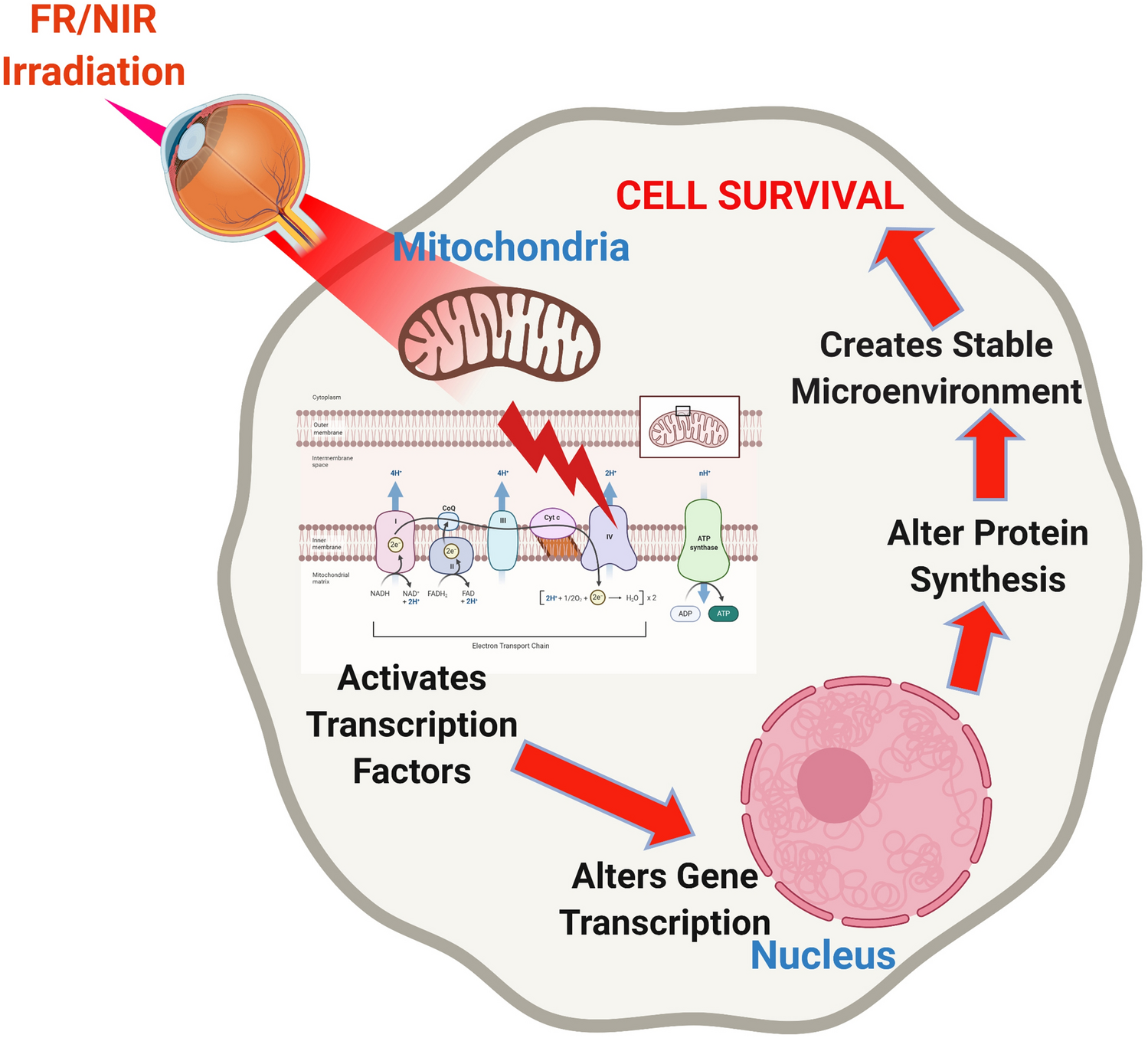
LED light therapy works through a process called photobiomodulation.
Inside your cells, particularly in the mitochondria, there is an enzyme called cytochrome c oxidase.
Red and near-infrared light interact with this enzyme to:
-
Increase ATP (cellular energy production)
-
Reduce oxidative stress
-
Modulate inflammation
-
Support collagen synthesis
-
Improve circulation
But this process only activates when:
-
The wavelength matches the absorption window
-
The irradiance reaches therapeutic levels
-
The dose is delivered consistently
This is known as the biphasic dose response, too little does nothing, too much is inefficient.
Why Many At-Home LED Devices Underperform
The biggest issue in the LED market is underpowered devices.
Common problems include:
-
No irradiance disclosure
-
Generic “red light” claims without nm specification
-
Very low mW/cm² output
-
Poor LED density
-
Inconsistent spacing causing uneven delivery
If irradiance is too low, brands compensate by recommending longer sessions, but that does not always achieve the required energy density.
Wavelength without irradiance = coloured light, Irradiance without correct wavelength = misplaced energy, Both together = therapeutic response
How to Assess an LED Device Properly
When evaluating an LED mask or panel, look for:
1. Exact Wavelength Disclosure
Specific numbers (e.g., 633nm, 660nm, 830nm), not vague colour descriptions.
2. Published Irradiance Output
Measured in mW/cm² at treatment distance.
3. Even LED Distribution
Uniform spacing prevents “patchy” stimulation.
4. Session Time Guidance Based on Dose
Treatment time should correlate to delivering an effective J/cm² range.
Red Light vs Near-Infrared: Why Both Matter
Red light (around 630–660nm) works primarily in the superficial dermis, improving:
-
Fine lines
-
Redness
-
Skin texture
-
Mild inflammation
Near-infrared (around 830nm) penetrates deeper, supporting:
-
Tissue repair
-
Barrier resilience
-
Deeper inflammation modulation
-
Skin recovery post-procedure
For comprehensive skin rejuvenation, combining wavelengths often produces superior outcomes.
Does Higher Irradiance Mean Better Results?
Not necessarily. LED therapy follows a dose-dependent curve. More is not always better.
Optimal ranges must:
-
Avoid excessive thermal effect
-
Deliver enough photons to activate mitochondrial pathways
-
Stay within researched photobiomodulation parameters
This is why professional-grade systems calculate dose precisely rather than relying purely on session length. Read more about our professional Lumineo Advanced LED Device.
Why This Matters for Skin Ageing
When LED therapy is delivered correctly:
-
Collagen production increases
-
Fibroblast activity improves
-
Inflammation reduces
-
Microcirculation enhances
-
Recovery time shortens
But these effects depend entirely on correct wavelength + adequate irradiance. That is the difference between cosmetic glow and measurable biological change.
Frequently Asked Questions (FAQs)
Is wavelength more important than irradiance?
Neither works alone. Wavelength determines the biological target; irradiance determines whether enough energy reaches that target.
What irradiance should an LED device have?
Therapeutic ranges vary by wavelength, treatment goal and your skin type.
Does longer treatment time compensate for low power?
Sometimes, but only if sufficient energy density can realistically be achieved. Extremely low irradiance may require impractically long sessions.
